A
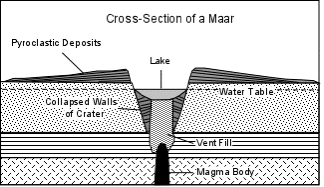
maar is a broad, low-relief (shallow), volcanic crater. The name derives from the Latin "mare" (sea).
Maars
are formed by a single explosion created when groundwater comes into contact
with lava or magma. The magma heats up groundwater, pressure builds as the
water to turns to steam, and then the water, some new magma, and preexisting
rock are blasted out of the ground to form a tephra cone with gentle slopes.
This is called a phreatomagmatic eruption.
Parts of the crater walls
eventually collapse back into the crater, the vent is filled with loose
material, and, if the crater still is deeper than the water table, the crater
fills with water to form a lake, the lake level coinciding with the water
table.
(American Heritage Science Dictionary and Tulane.edu)
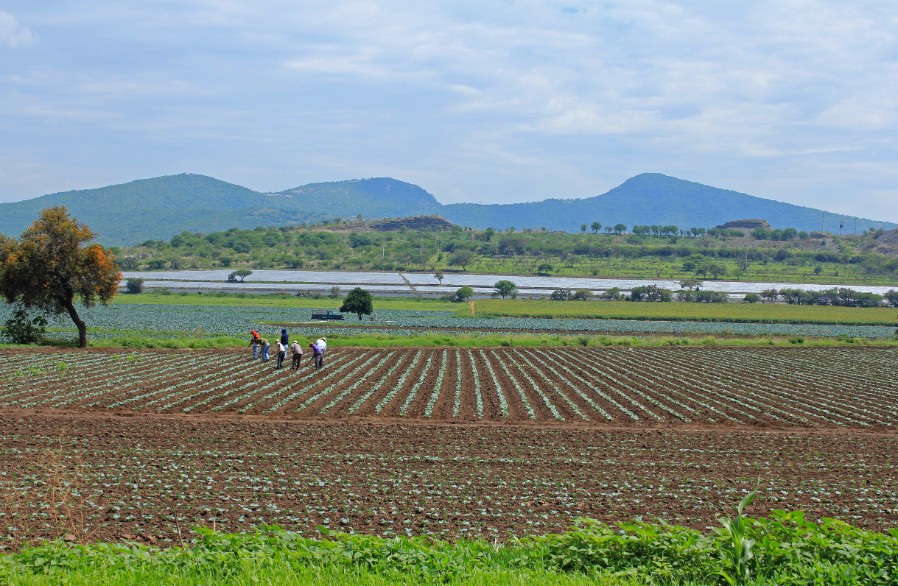
Examples of Maare include Lake Nyos in Cameroon and Crater
Rincón
de Parangueo, La Alberca, and Hoya de Alvarez in the Valley of the Seven Lights (Valle de las Siete Luminarias), Mexico.
Low-Relief: Shallow
Tephra:
Material ejected during a volcanic eruption